
I feel as if I’m fetching water from a well that has been dry for years. It’s less laborious than reminiscing about a childhood home which is no longer there, but in traveling, I’m chapped from time to time by the reality that there are things I am seeing simultaneously for the first and the last time. Time changes everything. There is no person, no relationship, or idea that can resist or outlive it.
It’s been seven years since I last visited Slovenia, the wonderful and soft-spoken wallflower of the Alpine states. I kept my memory of it alive like a branch of littleleaf linden, showering it with my intention to return in an always-near but never-defined future. Somewhere between the parentheses, the well ran dry. The Garden House—a quaint, vintage-chic hostel I slept in during my visit to Lake Bled—had withered and ceased its operations, as did the airline that previously brought me here.


“They sold it, mismanaged it, and finally bankrupted it a few years ago,” recounted my host, Aljoša, over the sad demise of the former flag carrier, Adria Airways. In the airy Ljubljana apartment that he shares with his partner, Miha, we chewed the cud over a light breakfast of toast, eggs, and crumbled feta drizzled in homemade olive oil. The color, a clear and juicy green, reminded me of a plump table grape, while the scent bore a bouquet of freshly cut grass and just a hint of cracked black pepper. “It was pressed at my parents’ place,” said Alex, “close to where you’re going today.” I was looking forward to exploring the Slovene Riviera, a minuscule 50-kilometer strip of shoreline tucked into the northwestern edge of a large peninsula called Istria. It was the high tide of summer, and I missed the salt and the sea.


I showed up at the station ten minutes before departure time to find an already fully packed bus. A woman and her son were waiting outside to board, and I filed in line behind them. When the conductor announced that there was only one remaining seat, the mother made neither a fuss nor a plea but simply turned to me and, in English, explained the situation and instructed me to get on. It was a virtuous gesture. Her comportment left me with a gratitude for the people in this city, a spread-out capital with fewer than 300,000 residents. The two-hour journey was a squeezed ride, but for only €2.70, it was a very cheap one. Miha mentioned that the government was subsidizing weekend bus fares, which might have explained the cram.


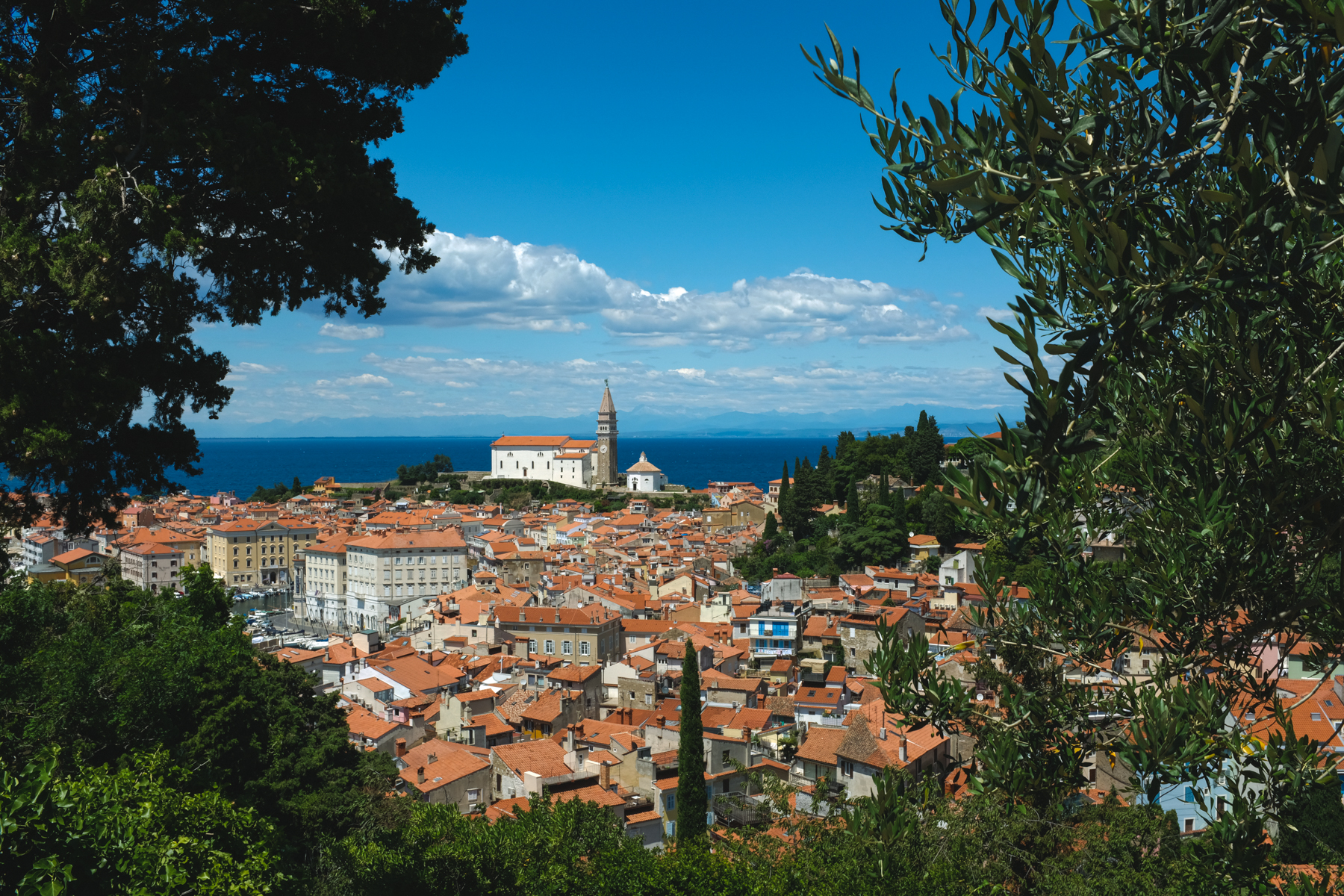
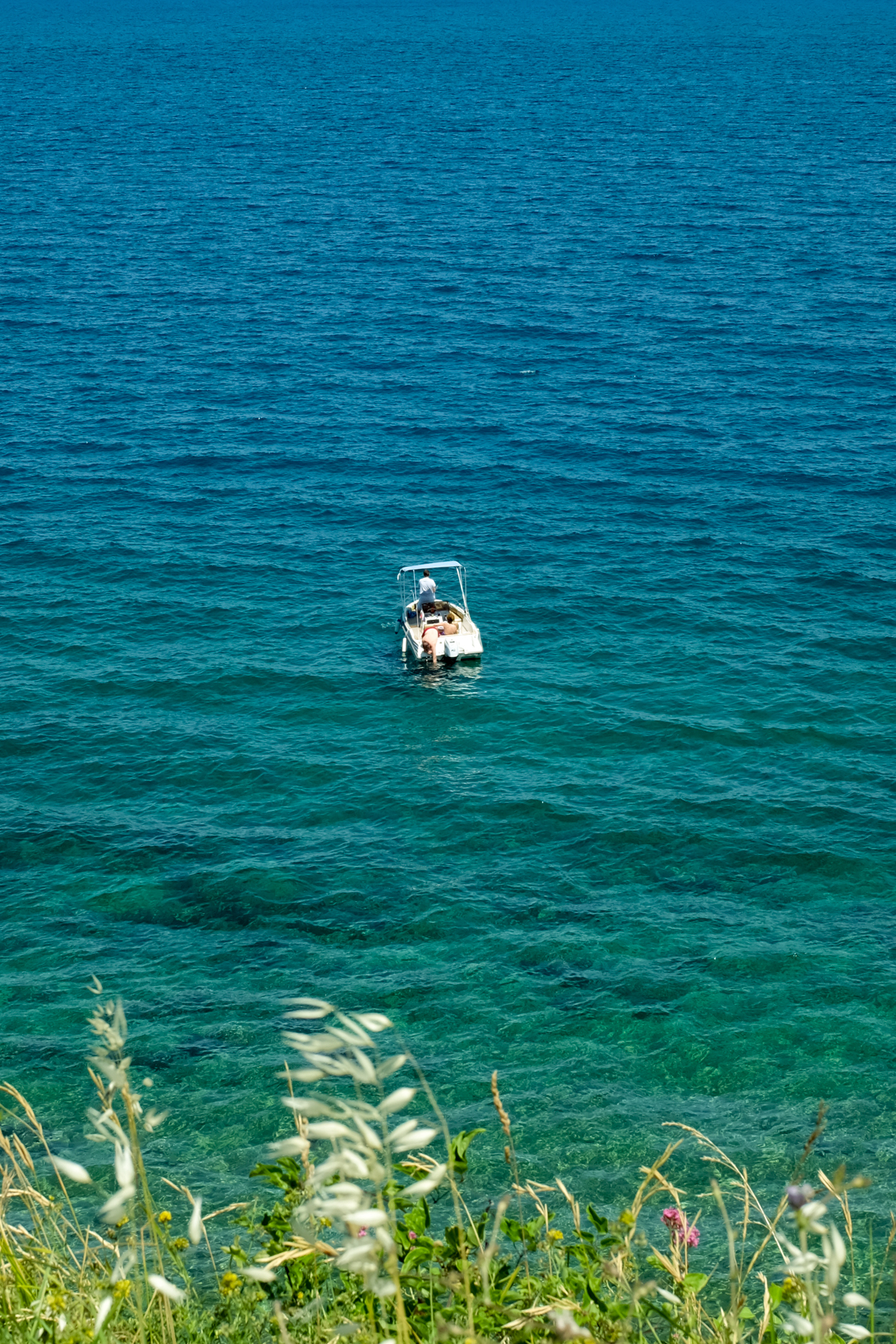
The road took us through a kaleidoscope of Slovene sceneries, from rolling glimpses of the Alps to billowing pastures, until finally the dappled blue and turquoise of the littoral came into view and a string of seaside towns presented themselves: Koper, the port city; Izola, a former island turned promontory of unparalleled beauty when seen from the heights; Portorož, a grand and lively balneal resort; and little wedge-shaped Piran with its medieval arm extending into the sea, as if scooping up a handful of pearls. The spirit of the Mediterranean is strong here, but gentle, rising up to greet you in one of many avatars. It may take the shape of a limestone mermaid, sitting stoically at the cape of Piran; or perhaps a primo of delicate scallop carpaccio; or a soft lapping wave by the campsite of Fiesa, where dark-eyed Matej led me into the brackish back forest for a spontaneous midafternoon tryst.

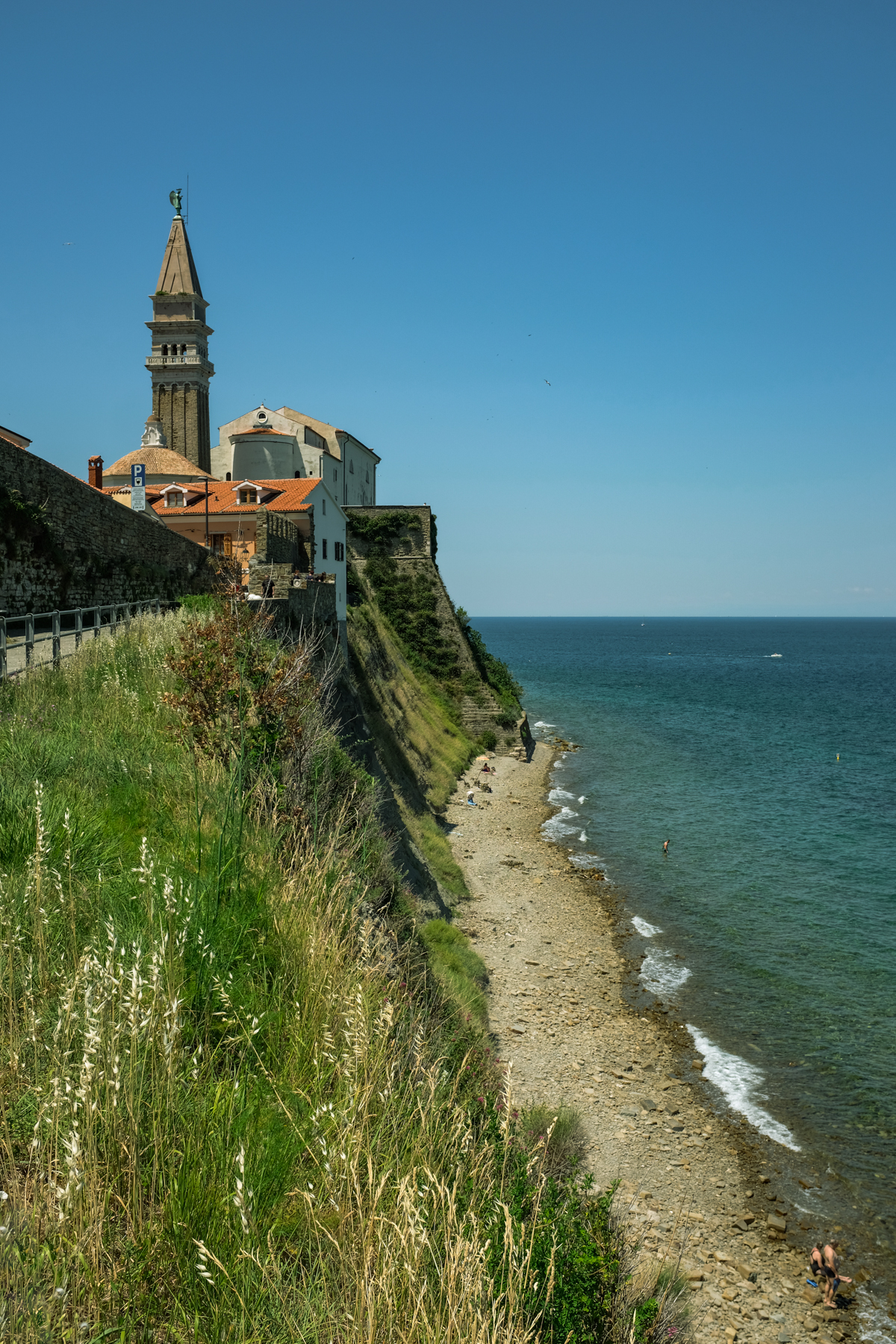

Like a polished glowing piece of sea glass, the Slovene Riviera—the country’s only coast—is the result of centuries of political tumbling. Today, it is flanked by Italy to the north and Croatia to the south, but from the 13th to the end of the 18th century, the entire Riviera along with most of the Istrian Peninsula belonged to the Republic of Venice, which at the time was a sovereign maritime nation. The end of Venetian independence saw Istria traded back and forth between two larger forces—Habsburg Austria and Napoleonic France—before it became a part of Italy after the First World War. At the end of the Second World War, most of the land in Istria was given to Yugoslavia, causing a mass exodus of Italians from the Slovene Riviera in the 1940s and 50s. Until then, Italian had been the dominant language in the urban centers, and the towns were known by their Italian names: Capo d’Istria (Koper), Isola, Portorose, and Pirano. Today, while officially bilingual, the vast majority of residents are Slovenes. But the italianità lingers, and the thirst-quenching essence of la dolce vita wafts from the tangerine tiles of the rooftops all the way down to the pebbled beaches.
The old town centers of the Riviera are rooted in an even more ancient history, which they share with larger Italian and Croatian coastal cities. In the fifth century, as the power of the Roman Empire waned, advancing tribes such as the Slavs forced the local population in Istria and northeastern Italy to flee to more defensible locations. The lagoons, islands, and peninsulas of the Adriatic Sea—the northernmost tongue of the Mediterranean—provided a watery shelter for the birth of Venice, Dubrovnik, Piran, and the like. If there are those that call Piran “Venice on a budget,” they would not be entirely wrong. While not as identical as two peas in a pod, both are of the same stalk.


There is a futility in trying to maintain an up-to-date record of places. Where one flower withers, another species takes its place. Prices go up, routes change, accommodations reinvent themselves. Perhaps the best I can do is to leave these recollections unrevised—a frozen frame in an endlessly trailing film. Perhaps, when the pieces of polished sea glass are tossed back into a puffed up Adriatic and Piran is known by some other name, they will wonder about the Piran of the Slovene Riviera.
Staying in Piran
On a quiet cobblestone alley just steps away from Tartini Square, St. George’s Parish Church, and the Gulf of Trieste, the pristine PachaMama offers single, double, and family rooms. At the center of the guesthouse decorated with travel photography from around the world is a peaceful garden terrace, where one can soak in the Mediterranean sun under the gaze of Piran’s campanile—a smaller replica of the San Marco Campanile in Venice. Singles around €77 per night.
 Gregory Gioro